Electricity and magnetism actually are related to each other!
As soon as electricity starts running through a wire (conductor), a magnetic field is created around that wire. If a compass was put beside the wire with current going through it, the compass would be affected which proves that there is a magnetic field around the wire.
What's even more amazing is that the world's magnet isn't actually pointing directly north or south, but rather some degrees off. There is no current explanation of why.. perhaps 2012? :(
But wait, there's something else. Scientists don't have time to draw all these fancy diagrams therefore they use symbols like the 'o' and 'x'. The 'o' symbol represents a wire going towards you, as the 'x' represents it going away. Just think of an arrow as an example and you'll get it. :]
Now, to help us out with the circuits and what not, we use the right hand rules! There are 3 in total, but I'm only going to briefly talk about 2 of them.
Wednesday, February 23, 2011
Saturday, February 19, 2011
Concept Map and 10 Must Knows!
Concept map, what is it really? To me, it looks like a bunch of points all linked together some how. I find that part of it really confusing, however, it does have a major advantage; the concept map shows the connections and relations between different points/concepts. When we're studying, we always want to relate things and group them together to make it all easier to remember, and comprehend, but is this technique really for you? Perhaps not, unless you're a visual learner like me. I've never actually tried this technique but I am about to, and hopefully it'll end off as a new friend.
10 Must knows!
1. Series Circuit: A single-path circuit with flow of electrons.
2. Parallel Circuit: A multi-path(divisions) circuit with flow of electrons. :]
3. Electric Current: The flow of electricity through a conductor(rate of flow). Measured using an ammeter.
4. Electric Charge: Symbolized by (Q)and is the charge of electrons measured in Coulombs (C). The charge of an electron is approximatively 1.602 x 10^(-19)C. However since it is usually measured in Coulombs, each coulomb = 6.25 x 10^(18) electrons.
5. Conventional Current: Assumes that the current flows out of the positive terminal and flows towards the negative terminal. Contradicts electron flow.
6. Electron Flow: Assumes that the current flows out of the negative terminal and flows towards the positive terminal. Contradicts conventional flow.
7. Power, Energy, Voltage: The three main units that make up most equations and is required to make most calculations.
8. Ohm's Law: R=V/I, V=IR, I =V/R
9. Kirchhoff's Law:
Series:
Current:
It=I1=I2 =I3...=In
Potential Difference:
Vt=V1+V2+V3...+Vn
Resistance:
Rt=R1+R2+R3...+Rn
Parallel Circuit:
Current:
It=I1+I2 +I3...+In
Potential Difference:
Vt=V1=V2=V3...=Vn
Resistance:
1/Rt=1/R1 + 1/R2 + 1/R 3...+1/Rn
10.Mr. Chung: Awesome teacher .. if he givesgood HIGH marks to his students.
10 Must knows!
1. Series Circuit: A single-path circuit with flow of electrons.
2. Parallel Circuit: A multi-path(divisions) circuit with flow of electrons. :]
3. Electric Current: The flow of electricity through a conductor(rate of flow). Measured using an ammeter.
4. Electric Charge: Symbolized by (Q)and is the charge of electrons measured in Coulombs (C). The charge of an electron is approximatively 1.602 x 10^(-19)C. However since it is usually measured in Coulombs, each coulomb = 6.25 x 10^(18) electrons.
5. Conventional Current: Assumes that the current flows out of the positive terminal and flows towards the negative terminal. Contradicts electron flow.
6. Electron Flow: Assumes that the current flows out of the negative terminal and flows towards the positive terminal. Contradicts conventional flow.
7. Power, Energy, Voltage: The three main units that make up most equations and is required to make most calculations.
8. Ohm's Law: R=V/I, V=IR, I =V/R
9. Kirchhoff's Law:
Series:
Current:
It=I1=I2 =I3...=In
Potential Difference:
Vt=V1+V2+V3...+Vn
Resistance:
Rt=R1+R2+R3...+Rn
Parallel Circuit:
Current:
It=I1+I2 +I3...+In
Potential Difference:
Vt=V1=V2=V3...=Vn
Resistance:
1/Rt=1/R1 + 1/R2 + 1/R 3...+1/Rn
10.Mr. Chung: Awesome teacher .. if he gives
Friday, February 11, 2011
Ohm and Kirchhoff's laws?
Ohm and Kirchhoff are both amazing people to have been able to find such discoveries long ago which helps us even today. What are these laws?
Let's start with the Ohm's law which states that a section of current which is going through a conductor is proportional to the voltage/potential difference as well as inversely proportional to the resistance which is between them.
Now, Kirchhoff has come up with not one but two laws. The first law being the current law which states that the total amount of current/charge traveling through a node is proportional to the charge leaving the node.
The second law of Kirchhoff is the voltage law which states that in a circuit, the total voltage around the loop is equivalent to the total of all voltage drops within that same loop.
Let's start with the Ohm's law which states that a section of current which is going through a conductor is proportional to the voltage/potential difference as well as inversely proportional to the resistance which is between them.
Now, Kirchhoff has come up with not one but two laws. The first law being the current law which states that the total amount of current/charge traveling through a node is proportional to the charge leaving the node.
The second law of Kirchhoff is the voltage law which states that in a circuit, the total voltage around the loop is equivalent to the total of all voltage drops within that same loop.
Tuesday, February 8, 2011
Amazing Coasters
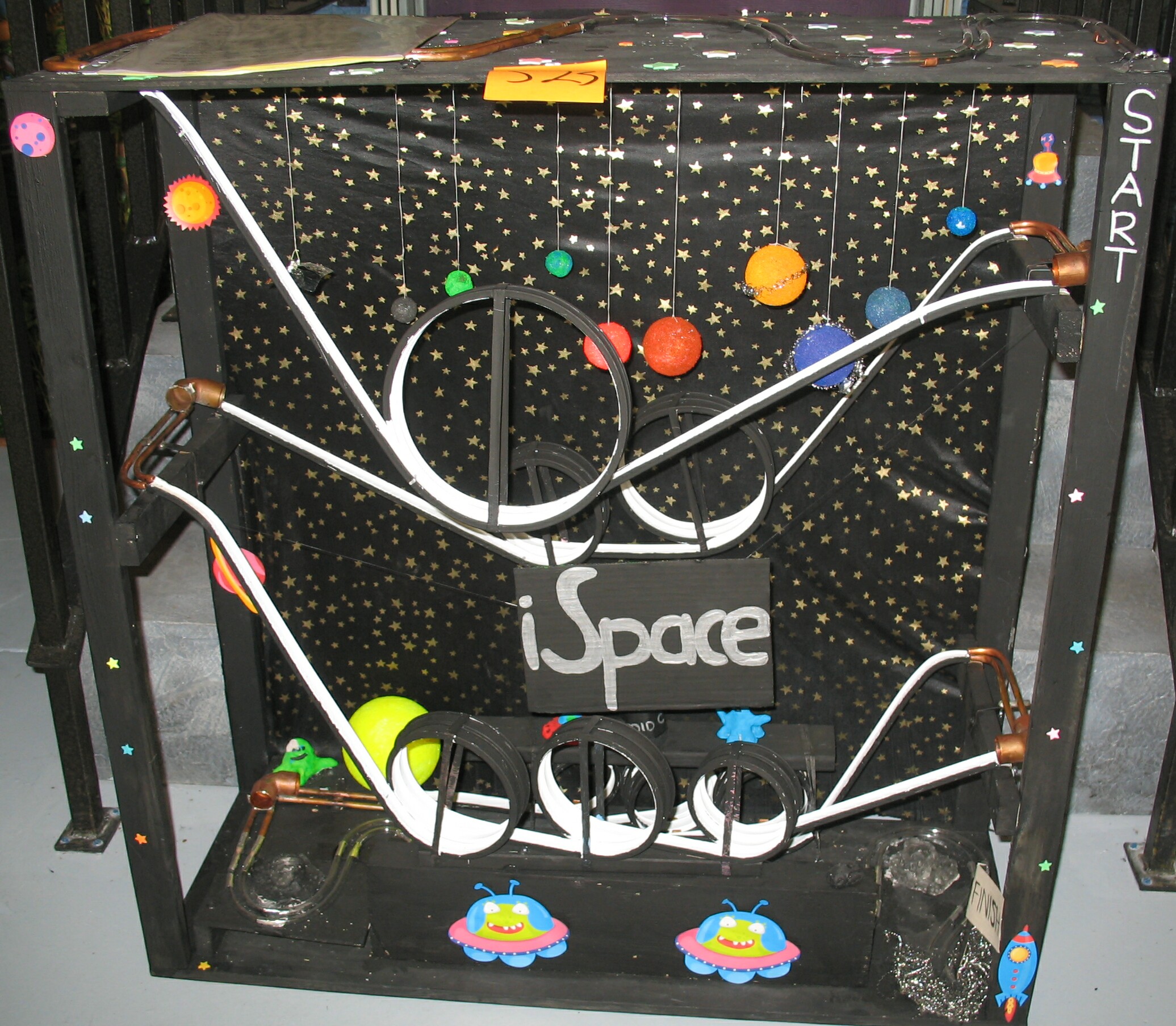
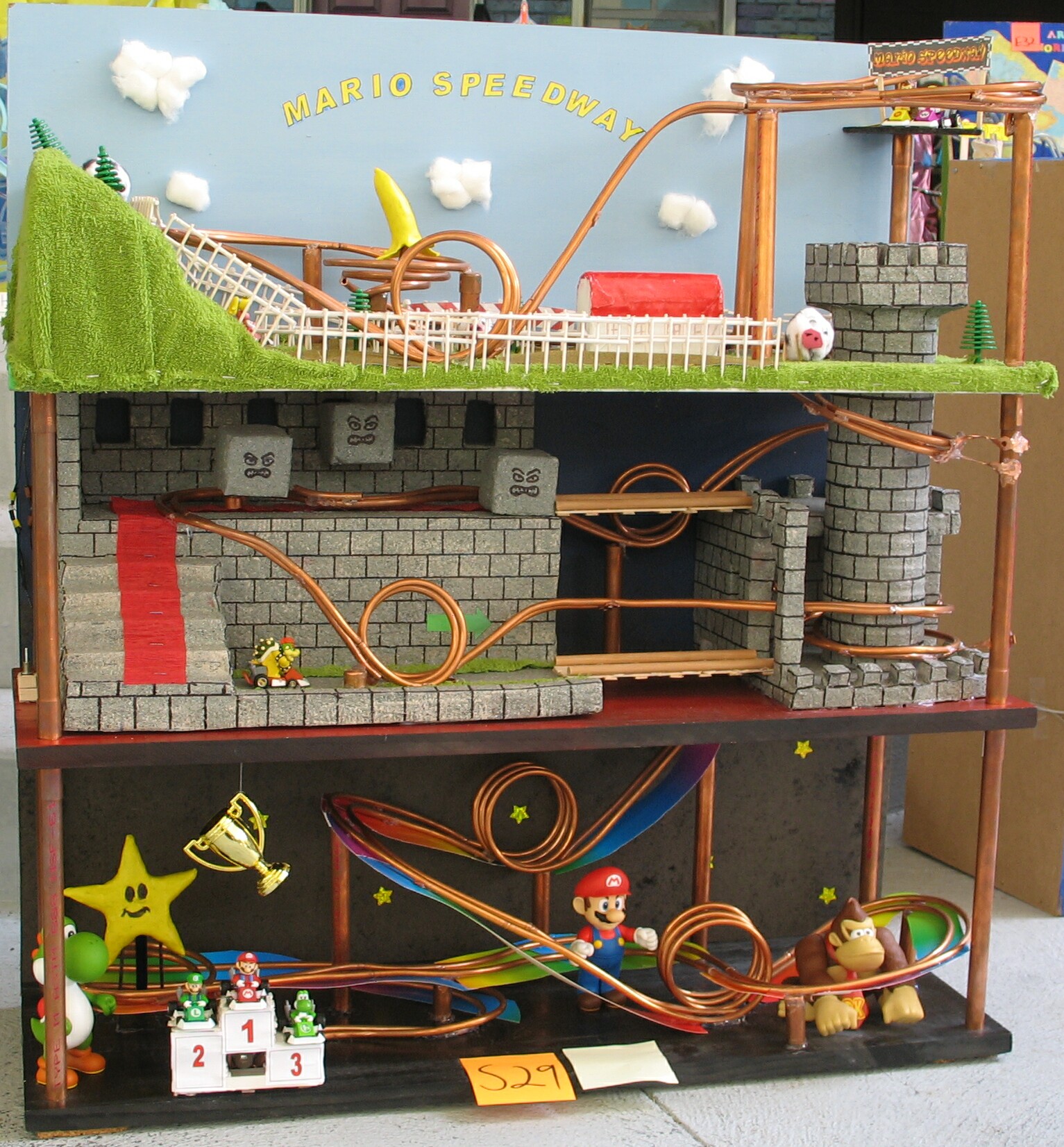
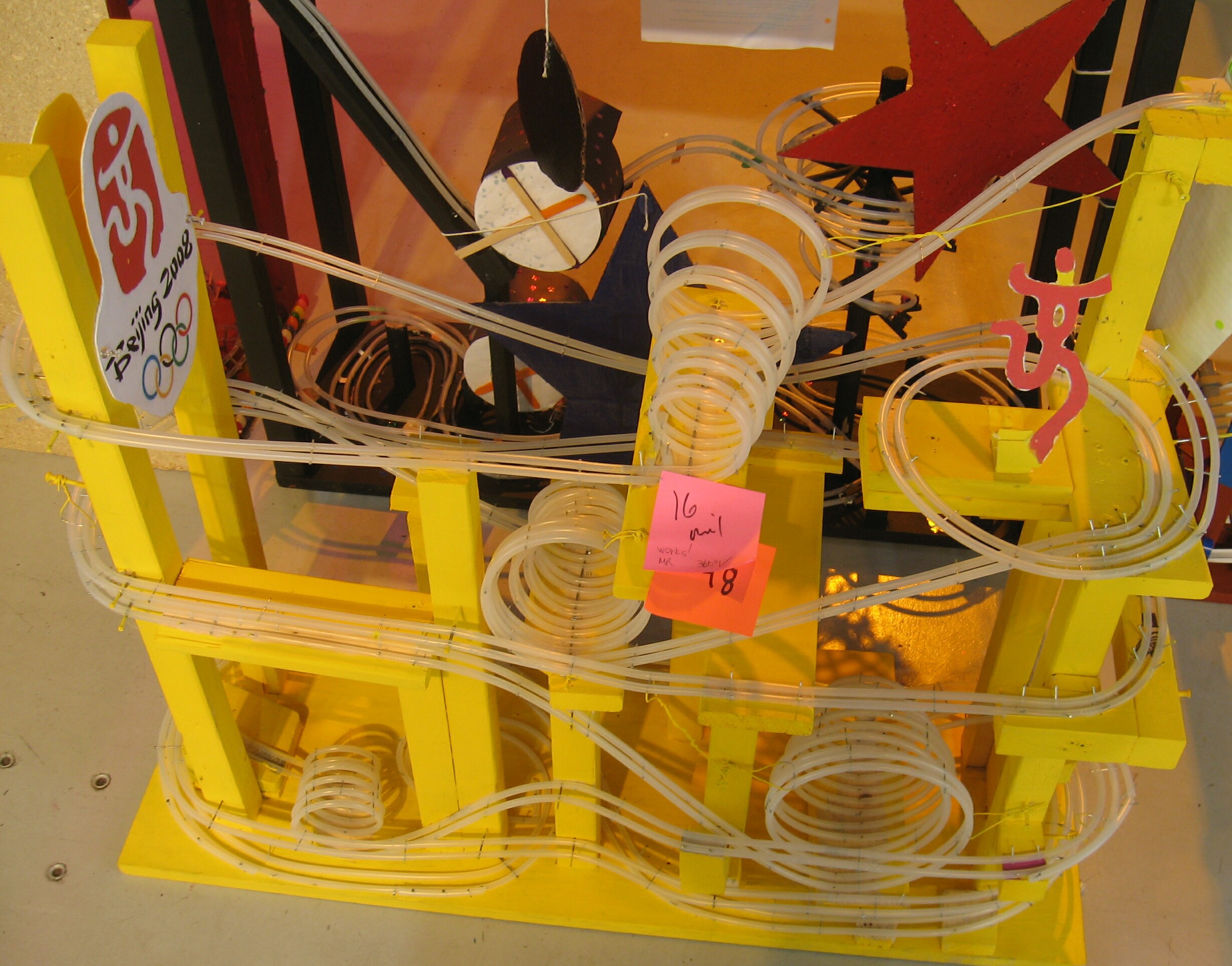
As I was checking out some of the top WonderCoasters I found a few that really caught my eye. Check it out.
Wonders of the battery
Energy is a really amazing thing, and there was always this empty part of my mind waiting to be filled in on how it all works. How does a battery really transfer energy to a device? Well, after watching an educational film in class, I came to a better understanding of how the transfer of energy works.
Simply enough, this is all done with the transfer of electrons. These negative electrons are like trucks that are given load at a source (ex. batteries) and they must carry the source to it's destination (light bulb). The electrons would start off from the negative terminal of a battery and move throughout the circuit by conductors, back to the positive terminal and so on. Now, this is called "electron flow". Technically, "conventional current" is also valid thought it travels the opposite direction (positive to negative) as electronic flow as long as it is consistent.
Saturday, February 5, 2011
Energy Ball
Recently, we've just finished an experiment with energy balls. Despite the name, it was quite complex and hard to comprehend how it actually works. The experiment went fairly well due to everyone's undivided attention and co-operation. We were able to use parallel structure to create switches which we could use to control the power of the energy balls which was rather interesting. Physics started off with a pretty cool experiment and we hope it can continue into even more awesome events :]
Subscribe to:
Comments (Atom)